Pregnancy
Pelvic Girdle Pain in Pregnancy: What It Is and What Actually Helps
SPD can make walking, rolling over in bed and even getting dressed hurt. Here's what pelvic girdle pain can involve, and how tailored support may help.
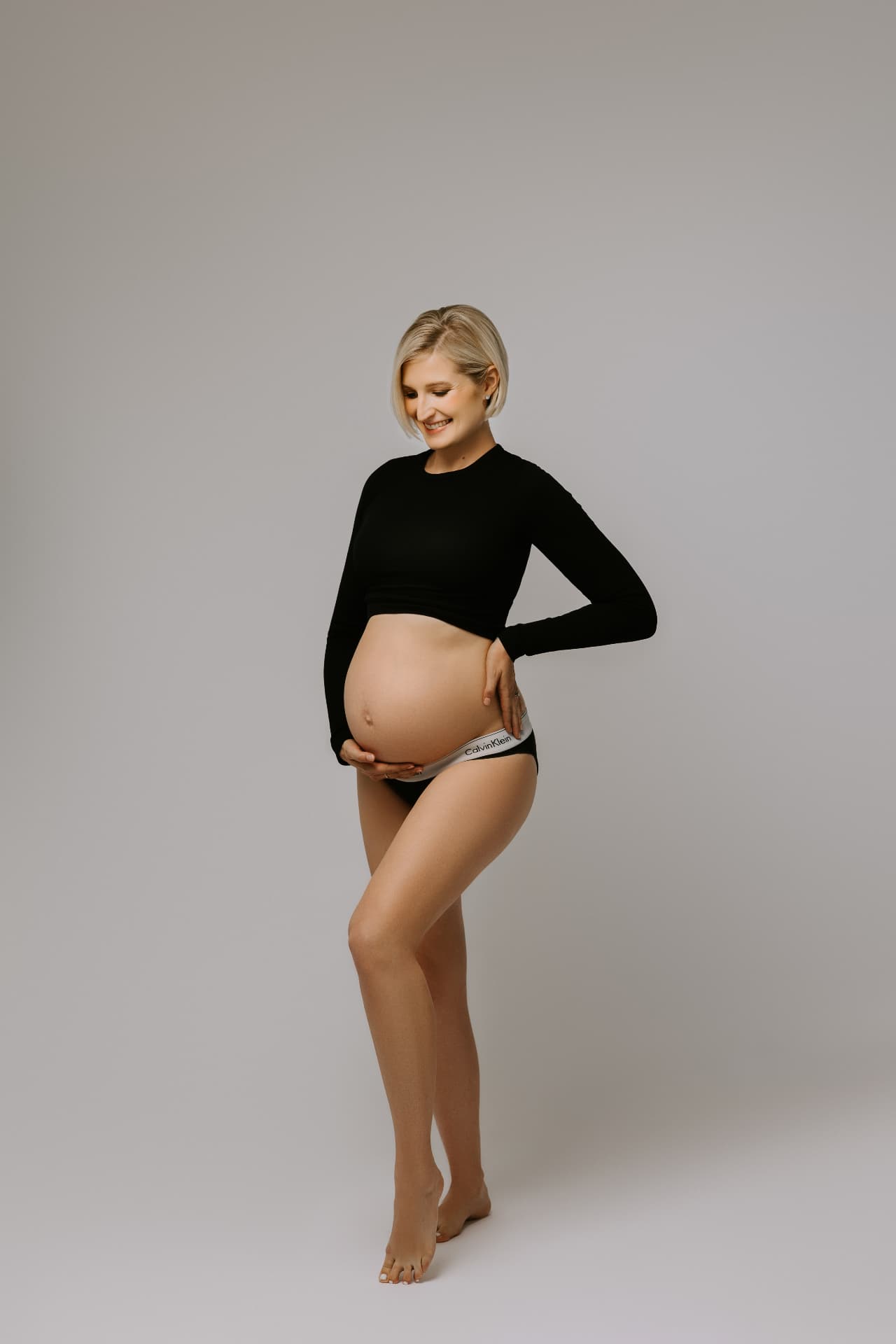
You roll over in bed and it feels like your pelvis is splitting in two. Walking upstairs hurts. Getting dressed standing up hurts. Even getting out of the car has become a strategic operation.
If that sounds familiar, you might be dealing with pelvic girdle pain, often called SPD (symphysis pubis dysfunction) or PGP. It is one of the most common complaints in pregnancy, and one of the most poorly explained.
Too many women are told some version of: it's normal, it's just pregnancy, it will go away after birth. Rest more. Do less.
Pelvic girdle pain is common. That does not mean you have to simply put up with it.
What is actually going on?
Your pelvis is a ring of bones connected by joints: the sacroiliac joints at the back and the pubic symphysis at the front. Pregnancy changes the demands on this area as your baby grows and the way you move, sit and stand changes.
Pain can be felt at the front or back of your pelvis, and sometimes around your hips or thighs. It does not automatically mean that your muscles are weak or that you have done something wrong.
"Pain deserves support, not blame. You do not have to simply put up with it."
You do not have to wait until it hurts
Here is what I wish every woman heard early: you do not have to wait for the pain to show up before you do something.
Once you're cleared for exercising during pregnancy, it's the perfect time to start or adapt your current strength programme. Certain areas such as your deep core, pelvic floor and glutes need more attention as your belly is growing.
Preparation is not about being perfect. It's honouring that your body is changing and what worked in the past needs adjustment through this season of life.
If pain still appears, it is not a sign that you failed: get individual advice and adapt your training.
Finding a balance between movement and rest
Rest has a place, especially during a flare-up. Clinical guidance recommends balancing activity with rest, changing activities that worsen symptoms and getting individual advice. You do not have to choose between doing nothing and pushing through.
Clinical guidance recommends individually tailored exercise as part of care for pelvic girdle pain, including work on the abdominal and pelvic floor muscles. The right exercise programme may help reduce pain and improve function, but the research is mixed and does not establish progressive strength training as the most effective treatment.
To prepare as well as you can, I recommend a tailored programme rather than random exercises from the internet. Not pushing through pain. A considered programme that aims to build capacity in the muscles supporting your pelvis, at a level that suits you. If you have pain, a women's health physiotherapist can assess it and help guide the plan.
Depending on your assessment, a programme may include work for your glutes, hips, abdominal and pelvic floor muscles. Bridges, side-lying exercises or controlled squats might be helpful, but it is always best to get individual guidance for optimal support.
What actually helps
1. Choose exercises that suit your symptoms
Depending on your assessment, a programme may include work for your glutes, hips, abdominal and pelvic floor muscles. Bridges, side-lying exercises or controlled squats are often suitable.
2. Keep your legs more symmetrical
Standing on one leg or moving your legs apart can aggravate symptoms for some women. Try sitting down to put shoes on and keeping your knees together when getting out of the car. If lunges or single-leg work hurt, supported or two-legged alternatives may be more comfortable. Let your symptoms and assessment guide the changes.
3. Modify rather than push through
You may be able to stay active with suitable modifications, but what is appropriate depends on your symptoms and pregnancy. Changing your stance, range of movement, support or load may help. Stop or change exercises that worsen pain, and seek advice rather than forcing yourself to complete the session.
4. Manage the daily load
Look at which parts of your day aggravate symptoms: long walks, carrying a toddler on one hip or repeated trips up the stairs. Pacing activities, changing how you carry things and taking rest breaks may make daily life more manageable.
What to avoid while symptoms are active
Avoid or modify movements that worsen your symptoms. Often wide stances, stretching the legs far apart and single-leg work make symptoms worse. High-impact exercise such as running and jumping is off the cards later on in pregnancy anyway, as the core and pelvic floor cannot handle the pressure any more. Do not push through a sharp catch or increasing pelvic pain.
Your plan can change as your symptoms change. There is no fixed timetable for returning to a particular exercise.
When to get individual help
A women's health physiotherapist can assess your symptoms and discuss tailored exercise, pacing and other options, such as a pelvic support belt.
And if you want to keep training, work with someone who actually understands pregnancy. Not someone who tells you to just stop lifting, and not someone who ignores the pain either.
The women I work with deserve to feel supported, not dismissed. Their bodies are adapting, and their training needs adapting too.

Written by
Hi, I'm Elke.
I'm a pregnancy and postpartum strength coach and matrescence coach, and a mum of two. I help women keep training through pregnancy and beyond, with programmes that adapt to their bodies, their symptoms and their lives.
Pelvic girdle pain does not make your ambitions less valid. My approach is to support you with considered training alongside the clinical care you need, modifying where necessary and making room for rest. Strength matters to me, but it is not the only tool, and needing a break is not a failure.
Everything starts with the body. And your body is worth taking seriously, pain included.
Sources
- Royal College of Obstetricians and Gynaecologists (2015): Pelvic girdle pain and pregnancy. Patient guidance on early assessment, tailored exercises, activity modification and other treatment options.
- NICE (2021): Management of pelvic girdle pain in pregnancy, Antenatal care, evidence review U. Reviews treatment evidence and supports considering physiotherapy referral for exercise advice and/or a non-rigid pelvic support belt; exercise evidence is limited and mixed.
- Liddle SD and Pennick V (2015): Interventions for preventing and treating low-back and pelvic pain during pregnancy. Cochrane Database of Systematic Reviews, CD001139. Some exercise programmes helped combined low-back and pelvic pain, but findings for pelvic pain alone were less clear. These results do not establish a particular strength programme as best or guarantee prevention.
- NHS (2026): Exercise in pregnancy. General pregnancy exercise guidance, including starting gently, adapting activity and seeking advice about existing health conditions. This is not evidence that exercise prevents PGP.